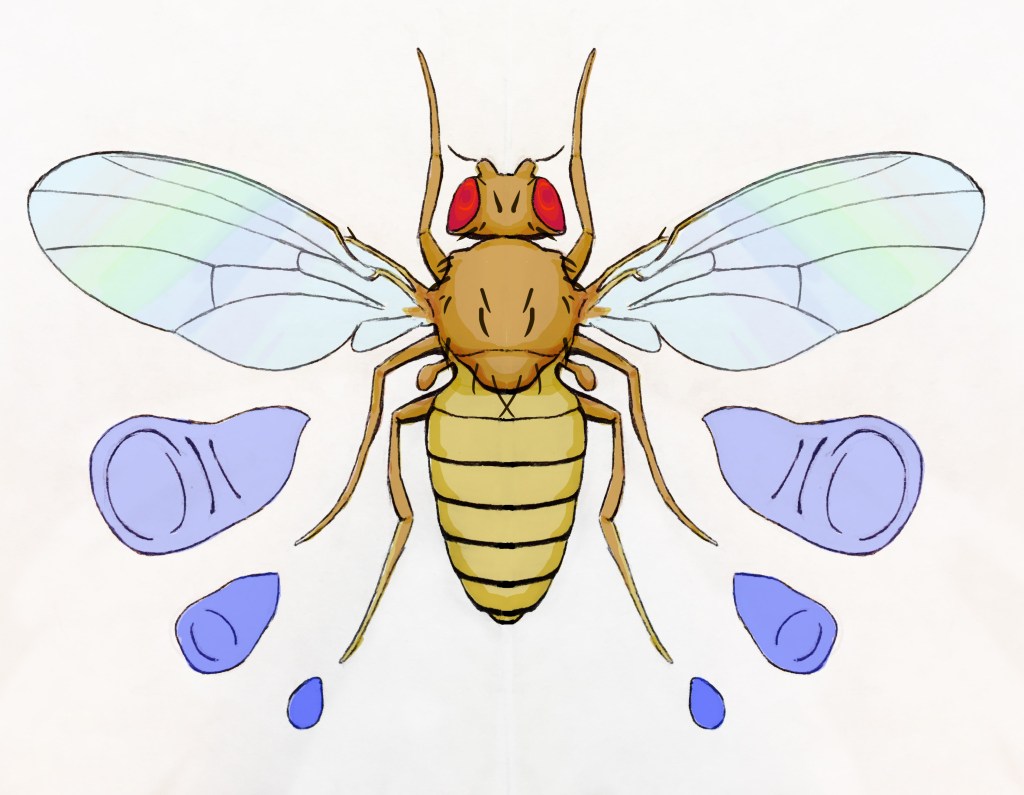
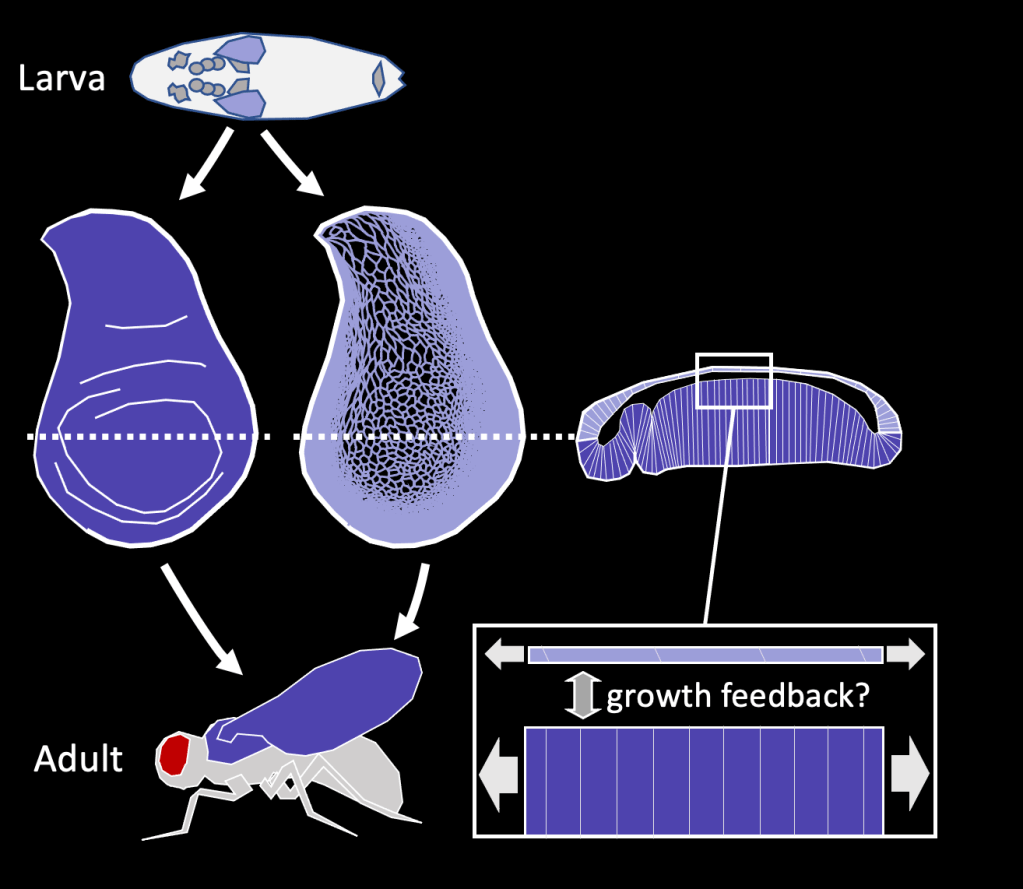
As a grad student at Berkeley, I studied tissue growth regulation. For organs to grow to the right size, tens of thousands of cells (or more) need to make decisions about growth and proliferation. Despite cells only sensing their immediate environment, they are able to grow and divide to produce a consistent, robust collective outcome. What information do they use to guide this behavior? I researched this question in a Drosophila larval tissue, the wing imaginal disc, which shares surprising commonalities with human development.
Check out my latest work on bioRxiv, where I investigate how mechanical forces and chemical signals allow two very different tissue layers to synchronize their growth.
Publications and presentations:
Cell and Developmental Biology and Physiology retreat, 2022 Sep 23. It’s a stretch: the Hippo pathway regulates cell shape changes to synchronize growth between two linked epithelia. Best Talk award winner.
The Annual Genetics Conference (TAGC), 2020 May 30. Investigating growth regulation in synchronously developing epithelia. Poster and audio walkthrough available at https://tagc2020.figshare.com/
Drosophila Research Conference, 2021 Mar 30. The side of tissue growth you haven’t seen.
Friesen S, Wahi K, Servello D, Cole SE. The Spaca6 locus uses multiple transcription start sites to produce protein-encoding transcripts and miRNA-producing transcripts. 2020. Mamm Genome (in review).
Wahi K, Friesen S, Coppola V, Cole SE. Putative binding sites for mir‐125 family miRNAs in the mouse Lfng 3′UTR affect transcript expression in the segmentation clock, but mir‐125a‐5p is dispensable for normal somitogenesis. 2017. Dev Dyn 246(10): 740-748.
Friesen S, Cole SE. The role of the microRNA mir-125a-5p in mouse skeletal development and fertility. 2017. Undergraduate research thesis, Dept. of Molecular Genetics, Ohio State University.
 Sophia Friesen